Dream Like Dalí
Project Type
Poster Series Campaign
Information
Medium: Digital and Physical
Software Used: Photoshop, InDesign, Lightroom, & Illustrator
Keywords: Nostalgic, Rustic, Reflective
Awards & Honors
Featured at Auburn Kaleidoscope Design Show, 2026.
Overview
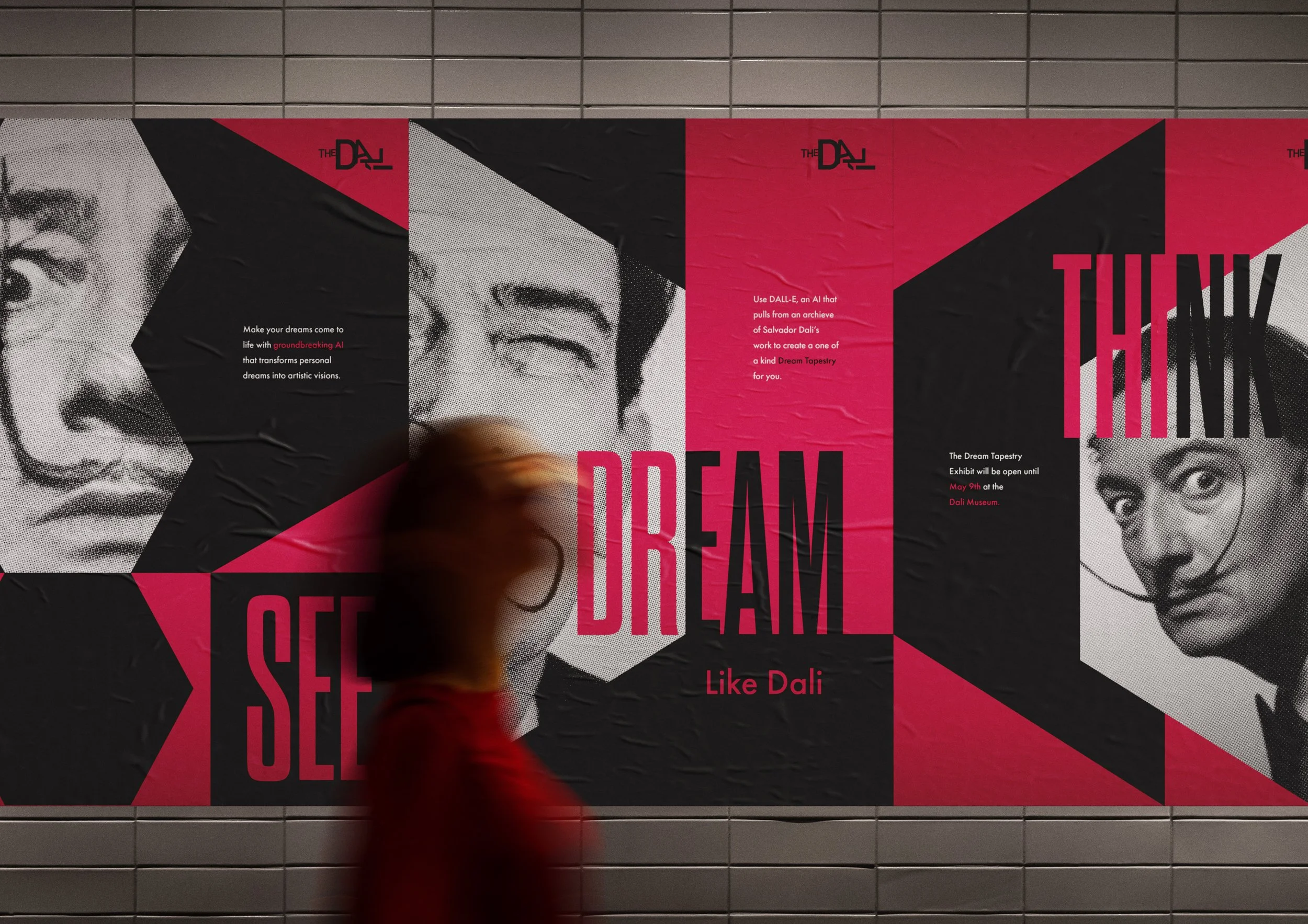
This campaign for the Dali Museum promotes their Dream Tapestry exhibit. The Dream Tapestry exhibit is an interactive installation where visitors submit dream descriptions, and an AI called DALL-E transforms them into visuals inspired by Dali’s work. The campaign's central concept explores how artificial intelligence can translate a visitor’s mind into Dali's surrealist visual language. To reinforce this concept, the call to action, “Dream, See, Think Like Dali,” uses action verbs that place the viewer within the experience and encourage participation.
The intended audience includes museum lovers and people interested in immersive, technology-driven art. After researching Dali’s work, the Dream Tapestry exhibit, and the visual language of artificial intelligence, the campaign's visual direction came to life. The museum's architecture, especially its dome of triangular glass panels, also inspired the visuals. The campaign uses strong geometric visuals, specifically a hexagonal form derived from AI’s logo, as the primary shape to establish hierarchy, structure, and movement. Triangular and rectangular forms reflect the fragmented nature of dreams and how the Dream Tapestry exhibit is displayed as a tapestry pieced together like a puzzle.
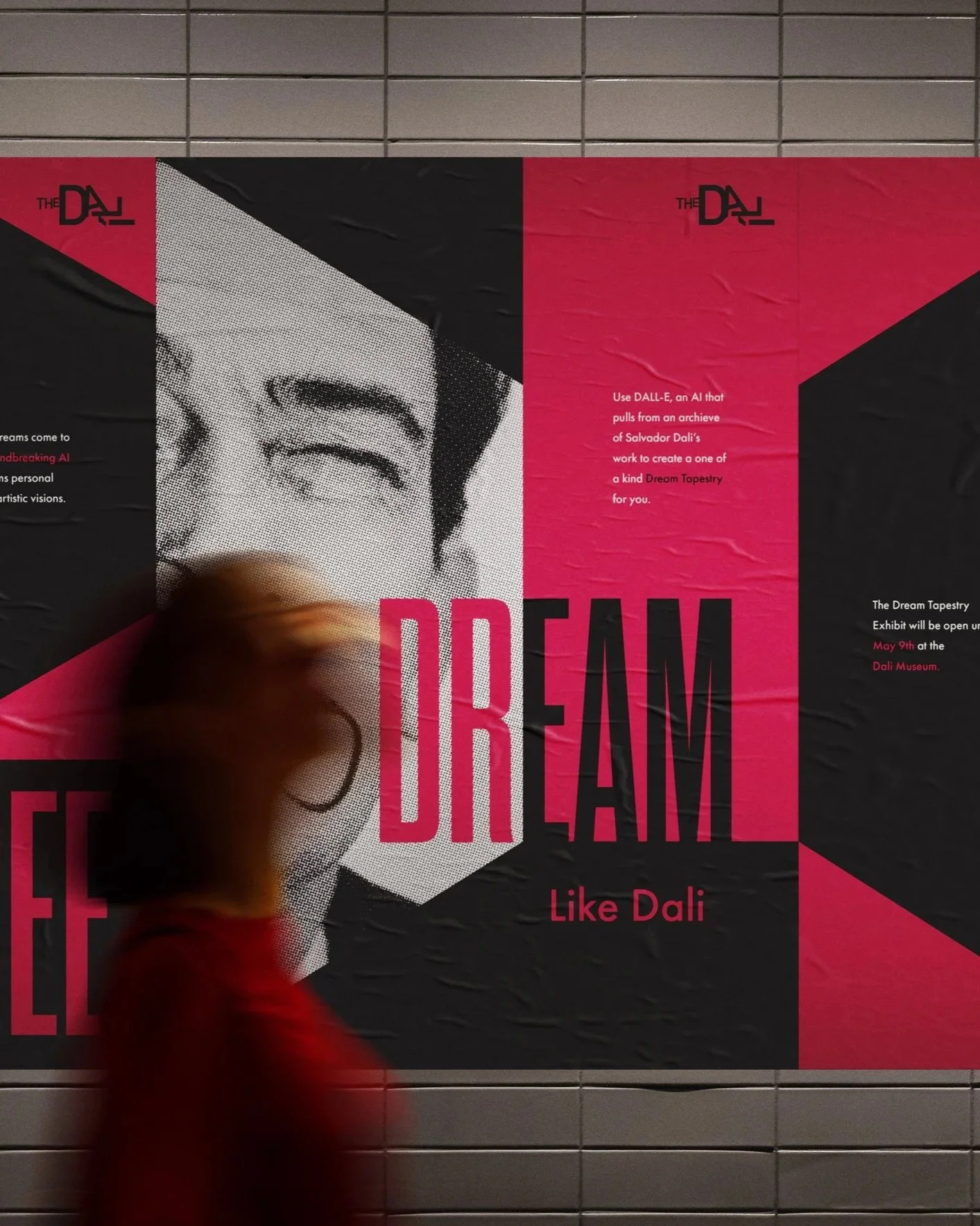
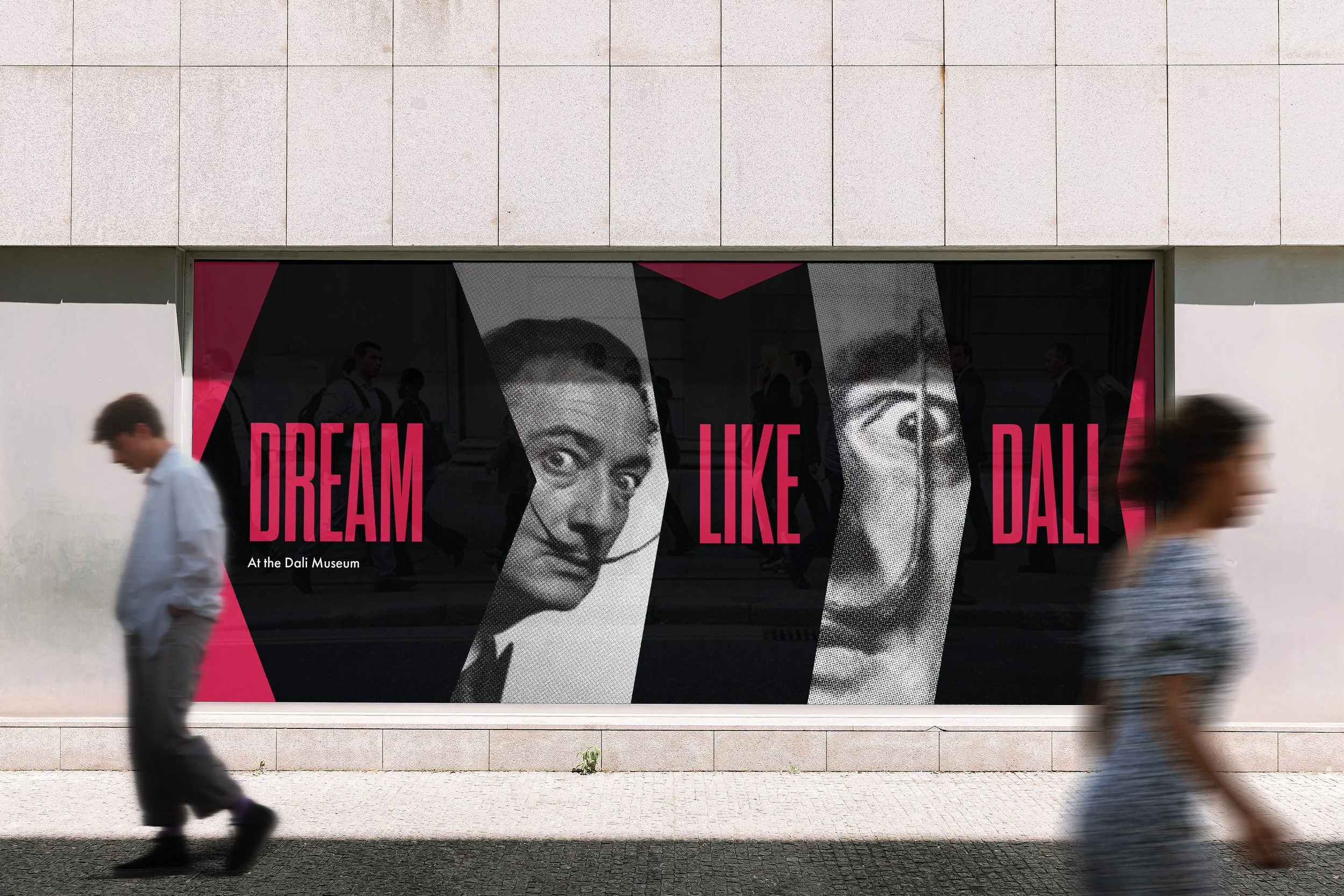
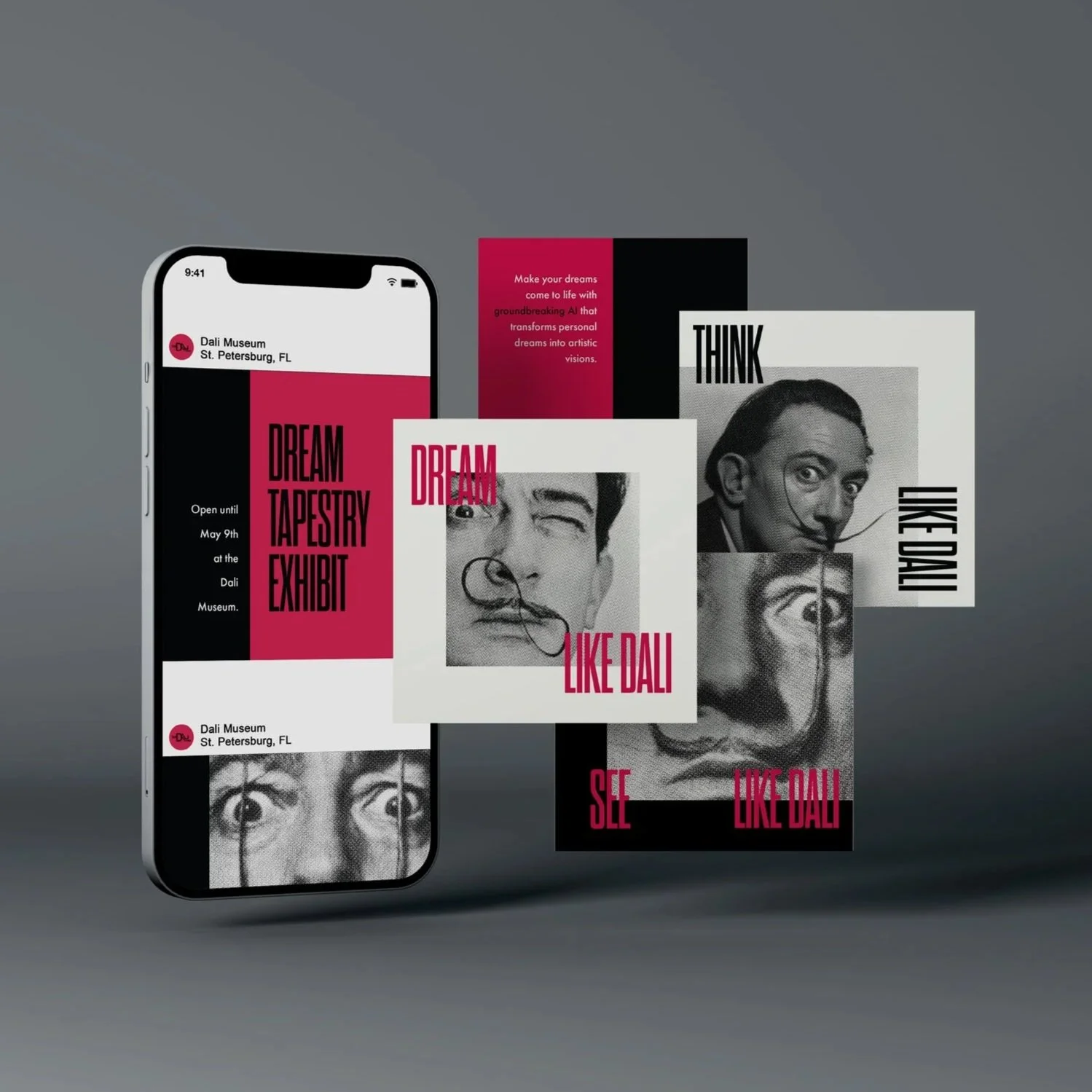
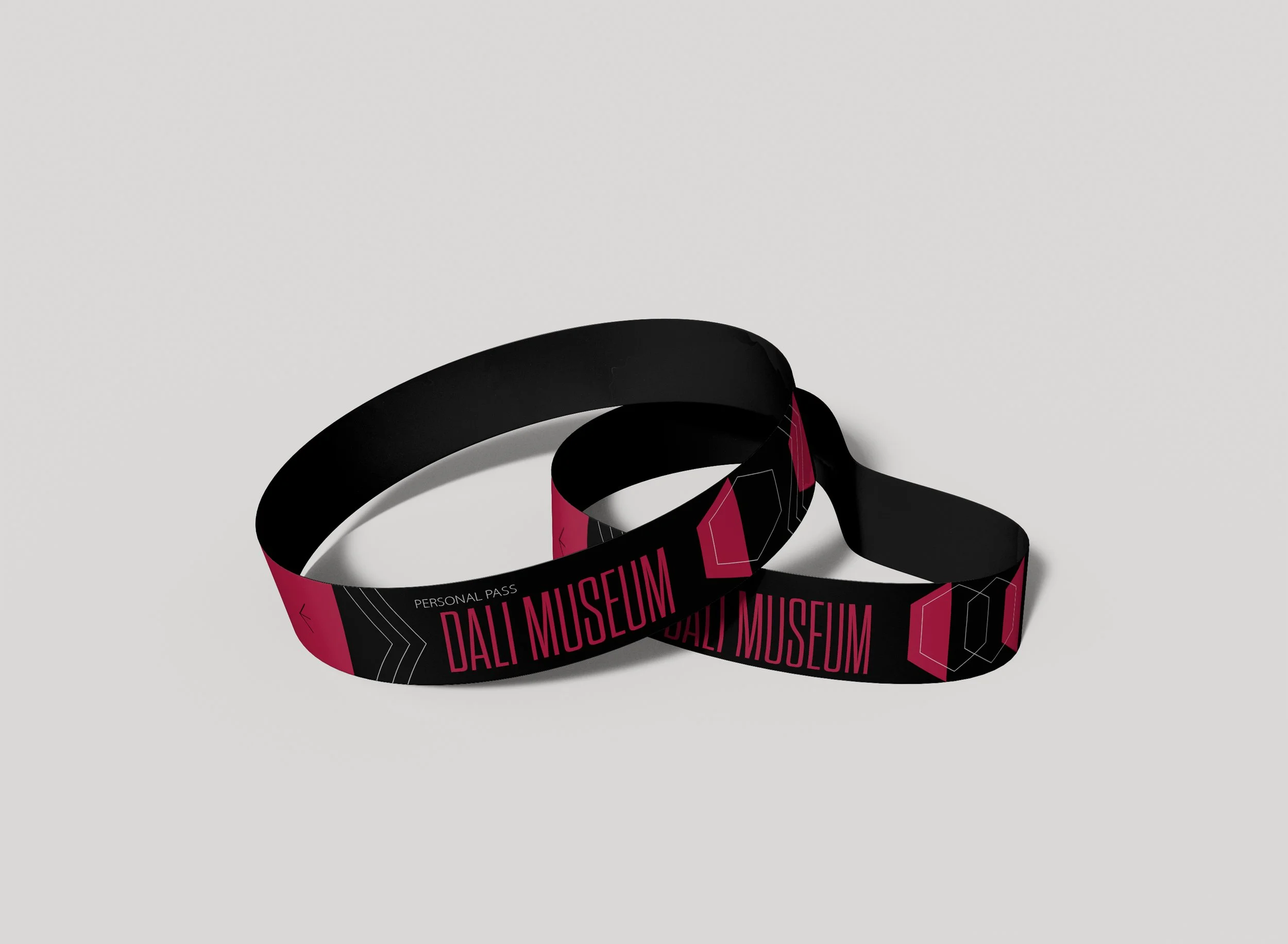
The main campaign poster is a set of three posters, each highlighting one word from the call to action: “Dream,” “See,” and “Think.” Each word is paired with a specific portrait of Dali, with the portraits transforming the verbs into visual actions through composition and expression. Together, the compositions create visual continuity across the series. This same visual system extends across additional campaign applications, including social media posts, wristbands, and a sidewalk banner. Typography and color further unify the campaign. Dharma Gothic C is used for primary headlines to create a bold, immediate impact, while Futura PT is used for supporting text to maintain readability. A color palette of pink, black, and white reflects the museum’s existing branding while creating a sharp and bold look. Through bold type, expressive portraits, and dynamic geometric forms, the campaign reflects the life and excitement of the Dream Tapestry exhibit while encouraging its audience to experience it firsthand.